
How to Protect Kids from Cyberbullying: A Parent's Guide (2026)

Cyberbullying has quietly become one of the biggest online risks facing children in Europe. In a recent EU survey of 6,343 children aged 12–17, one in four young people said they had personally experienced cyberbullying, and more than a third had witnessed it happening to someone else. The numbers are rising in every European country studied, which is exactly why the European Commission launched an EU-wide action plan against cyberbullying in 2026. If you're wondering how to protect kids from cyberbullying, the good news is that a few practical steps make a real difference.
What cyberbullying actually looks like
Cyberbullying isn't always dramatic. It can be a group chat your child is suddenly left out of, unkind comments on something they made, a rumour spreading between classmates, or messages that arrive late at night when no adult is watching. Because it follows children home from school and lives on the device in their pocket, it can feel relentless in a way playground teasing never did.
It's also more common among certain groups: across Europe, girls report being both victims and witnesses of cyberbullying more often than boys, and rates are especially high in countries including Poland, Finland and Denmark. Knowing the shape of the problem is the first step toward protecting against it.
The warning signs parents can watch for
Children often hide cyberbullying because they're embarrassed or afraid of losing device access. Watch for changes rather than proof: becoming withdrawn or anxious after using a device, suddenly avoiding a phone or app they used to love, trouble sleeping, reluctance to go to school, or secrecy about who they're talking to. None of these confirm cyberbullying on their own, but together they're a signal to gently open a conversation.
How to protect kids from cyberbullying at home
Prevention is mostly about connection and a few clear habits. These are the ones that matter most:
Keep the conversation open. Make it clear, before anything happens, that your child won't lose their device if they tell you about something upsetting online. Fear of that is the main reason kids stay silent.
Teach "screenshot, block, tell." A simple, repeatable response: save the evidence, block the person, and tell a trusted adult. Practising it removes the panic in the moment.
Talk about being an upstander, not a bystander. Since a third of children witness cyberbullying, teaching yours to support a targeted friend and report it changes the culture around them.
Protect sleep and downtime. Bullying that arrives at night is especially harmful. Devices out of the bedroom overnight gives your child a genuine break from it.
Choose age-appropriate, moderated spaces. Where your child spends time online hugely affects their exposure. The safest apps for kids limit open contact with strangers and have real people watching over interactions.
That last point is where online safety for kids and app choice meet. Open, unmoderated platforms leave children to handle bullying alone; well-designed children's spaces are built to catch it early.
How Momio's moderation helps protect against cyberbullying
Momio is a moderated online world made specifically for children aged 7–13 and moderation is exactly what makes it a strong answer to cyberbullying. A real moderation team, supported by filters, watches over chat and content so that hurtful messages and inappropriate behaviour can be caught and acted on, rather than left to spiral. Children use avatars instead of real photos, which removes a common target for appearance-based bullying and keeps their identity private.
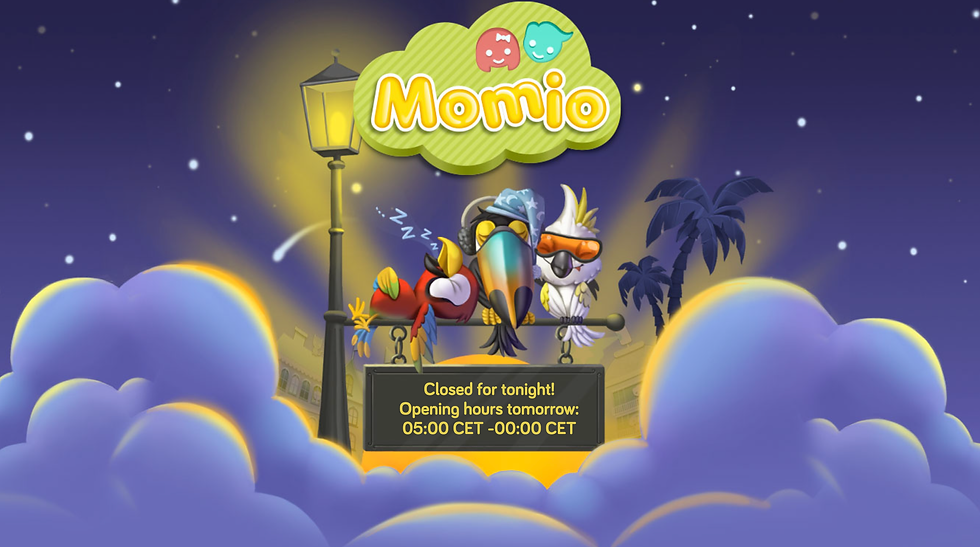
Momio also closes overnight, from midnight until 5am, so the app simply isn't available during the hours children should be asleep - meaning it can't become a channel for late-night messages when parents aren't around. Together, human moderation, avatar-based profiles and a built-in "off" at night make Momio a space designed to keep interactions kind, not a free-for-all your child has to navigate alone.
When to step in
If your child is being cyberbullied, stay calm and reassure them it isn't their fault. Save the evidence, use the platform's reporting and blocking tools, and involve their school if classmates are involved. For persistent or threatening behaviour, don't hesitate to escalate to the platform or, where needed, local authorities. Most importantly, keep checking in - recovering from cyberbullying is as much about feeling supported as it is about removing the messages.
The bottom line
Learning how to protect kids from cyberbullying comes down to three things: an open relationship where your child feels safe telling you, a simple plan for when something goes wrong, and choosing moderated, age-appropriate spaces that are built to keep interactions safe. Europe is taking the problem seriously in 2026 - and at home, your calm, consistent presence is still the strongest protection your child has.
Want an online space where kindness is built in? See how Momio keeps kids aged 7–13 safe.
________________________________________________________________________________
Sources:

