
Screen Time Guidelines for Kids: A Parent's Guide to Healthy Digital Habits
Screens aren't going away, and honestly, they don't need to. The question most parents actually wrestle with isn't "screens or no screens", it's how to set screen time guidelines for kids that fit real life without turning every evening into a negotiation. Here's what pediatric experts recommend, why nighttime is the part parents most often overlook, and how Momio was built with that gap in mind.
Why Screen Time Guidelines for Kids Matter More Than Ever
Kids aged 7–13 are growing up with devices as a default, not a novelty. The American Academy of Pediatrics (AAP) has actually moved away from strict hourly limits, and now frames healthy screen time around three things: quality, context, and displacement - meaning what a child is doing on screen, who they're doing it with, and what the screen time is replacing (sleep, play, family time) matter more than a stopwatch. That shift is useful, but it doesn't mean "anything goes." It means the guideline that matters most is protecting the things screens tend to crowd out - starting with sleep.
Screen Time by Age: What the Experts Recommend
Younger children (2–5 years)
The AAP and WHO both point to about one hour a day of high-quality, ideally co-viewed content for preschool-age kids, with less being better.
School-age kids (6–12 years)
This is Momio's core age group. There's no single hard number experts agree on anymore, but the consistent theme is protecting sleep and offline time first, then fitting screens around those needs - not the other way around.
Teens
Guidance here leans even more on context: what platforms they're using, whether there's moderation, and whether screen use is displacing sleep or in-person connection.
Across every age band, one number doesn't move: sleep. The CDC recommends 9–12 hours of sleep a night for kids aged 6–12 and that's the number most screen time habits quietly work against.
Why Nighttime Screens Are the Biggest Risk to Sleep
Late-night screen use is where good intentions usually fall apart. Screens emit blue light that suppresses melatonin, the hormone that tells the body it's time to sleep and kids who use screens in the hour before bed take longer to fall asleep, sleep fewer total hours, and report worse sleep quality than kids who don't. Sleep researchers generally recommend a screen-free window of 30–60 minutes before bed at minimum, with some experts suggesting a full "digital curfew" a couple of hours out.
This is the piece a lot of screen time plans miss. Parents set daily hour limits, but if those hours land at 10 or 11 PM, the sleep damage happens anyway.
Practical Screen Time Guidelines for Kids You Can Start Tonight
Set a digital curfew, not just a daily limit
A cutoff time - say, 8 or 9 PM depending on your child's age, does more for sleep quality than tracking total hours. It also removes the nightly argument over "just five more minutes." For more low-conflict tactics on making a limit actually stick, see how to limit screen time for kids aged 7–13 without the daily battle.
Keep bedrooms device-free overnight
Charging phones and tablets outside the bedroom removes both the temptation to check them and the blue-light exposure right before sleep.
Build the curfew into the tools your kids use
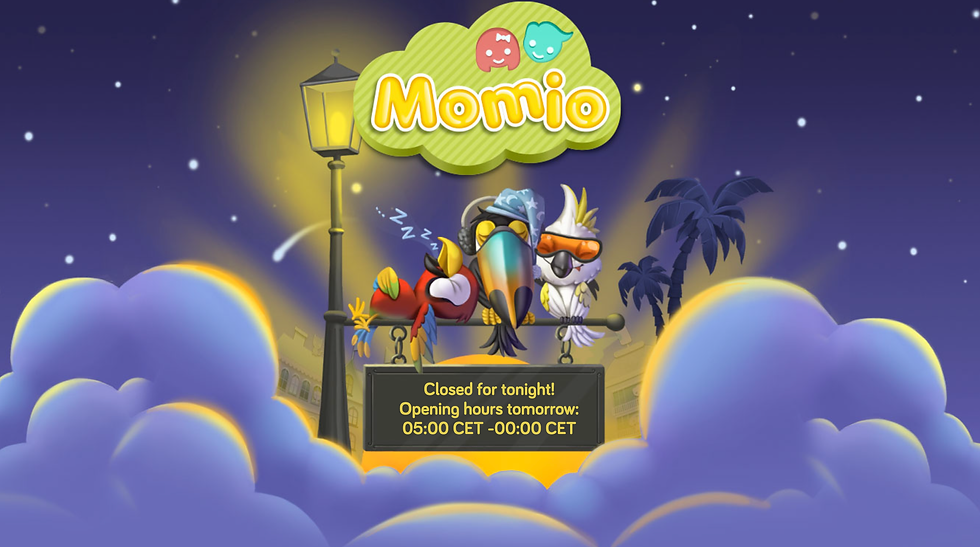
This is the part most apps leave entirely to parents to enforce - which is exhausting, night after night. Momio takes a different approach: the app itself closes overnight, from midnight until 5 AM, so kids can't be online during the hours that matter most for sleep. It's not a setting parents have to remember to turn on - it's built into how Momio works every single night, for every child on the platform.
Paired with 24/7 AI and human moderation and strict data-privacy standards, it's one part of a broader approach to giving kids a genuinely safe first social experience - details on both are on Momio's Parents & Safety page.
The Bottom Line
Screen time guidelines for kids work best when they protect sleep first and let everything else follow. Pick an age-appropriate daily amount, prioritize quality over quantity, and most importantly, build in a real overnight cutoff. Whether that's a house rule you enforce by hand or a platform that closes itself at night, the goal is the same: kids who get their hours online and their hours of sleep.
___________________________________________________________________________


